

Featured Image Gallery
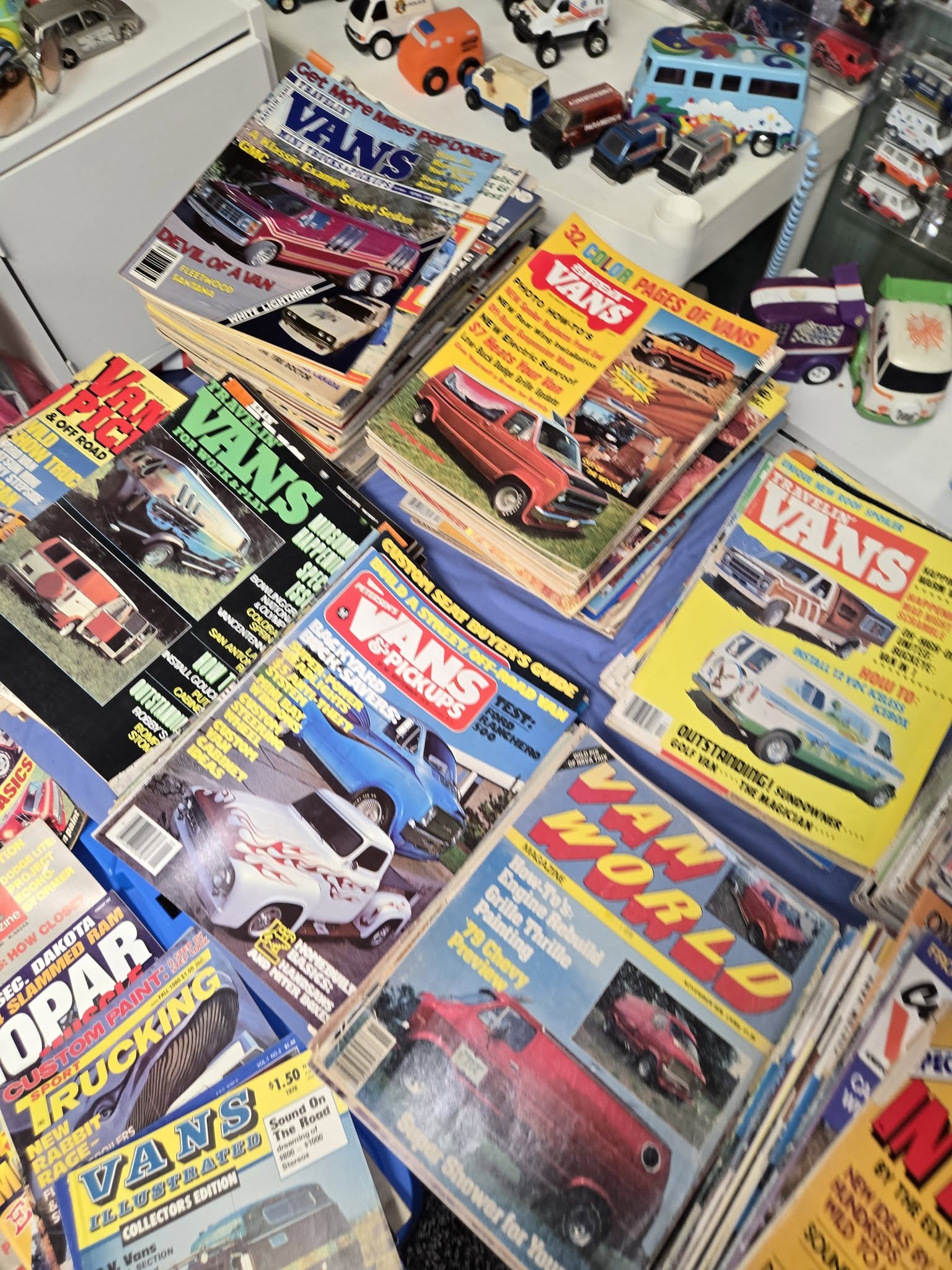
Image 1 – Archive Spread:
Stacks of vintage van and truck magazines arranged openly on the floor, covers visible, worn edges intact. This image represents decades of printed culture preserved rather than discarded.
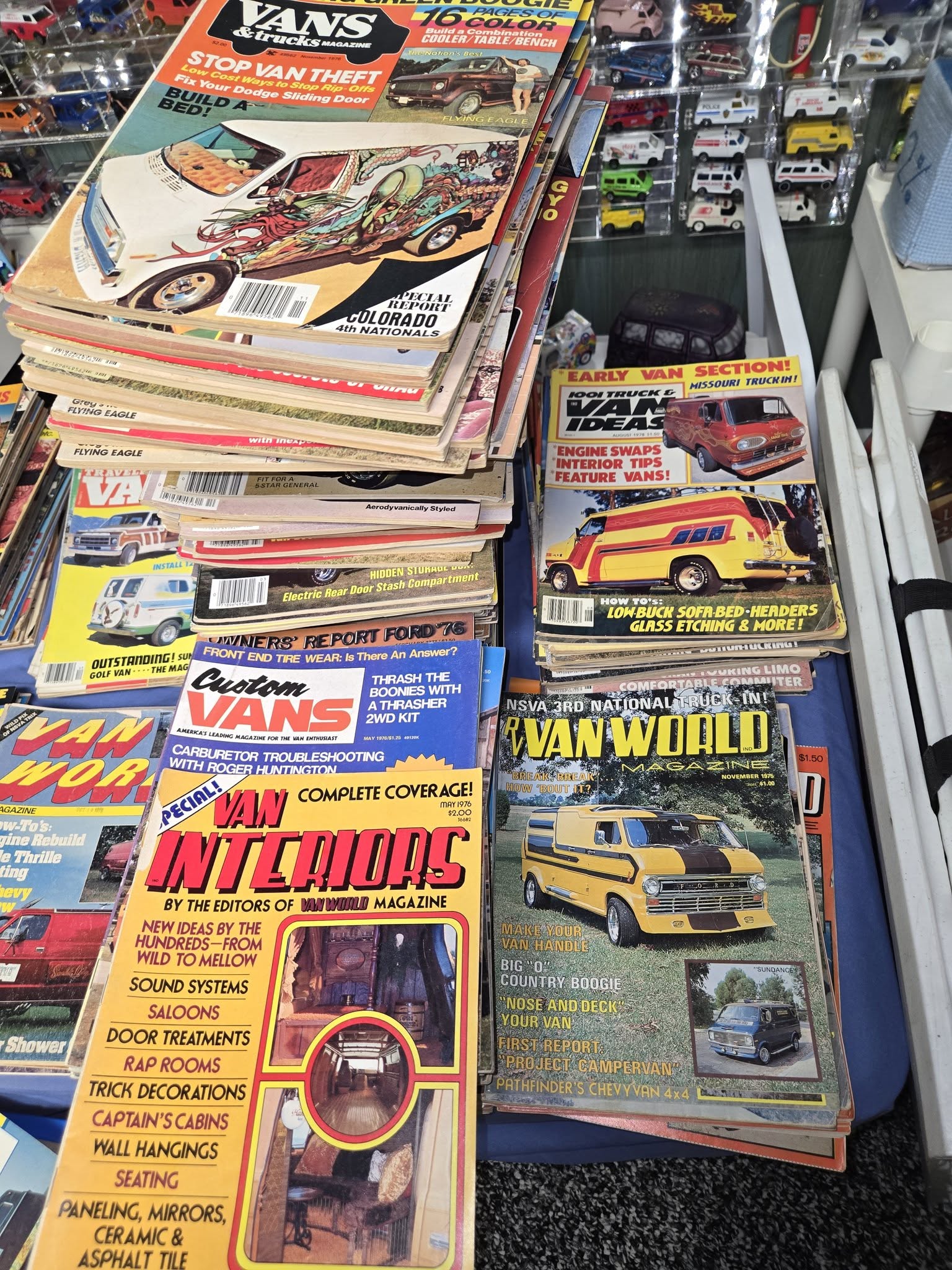
Image 2 – Collector’s Stack:
Carefully stacked magazines beside die-cast vehicles and memorabilia. A personal archive living inside a private space, not sealed away, but actively remembered.
Image 3 – Cultural Shelf:
Multiple stacks of classic automotive publications surrounded by collectibles. The magazines aren’t clutter—they’re curated history.
Vintage automotive magazines preserved as a personal archive of cultural history
What Stays When Everything Else Goes
Closets get cleared.
Garages get reorganized.
Shelves are thinned down to the essentials.
Yet some things are never questioned.
They aren’t sorted into piles. They aren’t labeled for donation. They aren’t debated.
They simply remain.
Printed Proof Doesn’t Ask Permission to Exist
These magazines weren’t kept because they were convenient.
They were kept because they meant something.
Every worn corner, every creased spine, every dated headline marks a moment that once mattered—and still does.
This is what happens when content moves beyond consumption and into preservation.
The Difference Between Storage and Archive
Storage hides things.
Archives honor them.
An archive is intentional. It’s visible. It tells a story without explanation.
These stacks of magazines are not clutter. They are records of interest, identity, and time.
That same instinct—to preserve rather than delete—is what drives meaningful recognition.
What This Reveals About Human Behavior
People don’t keep everything.
They keep:
- What represents effort
- What documents passion
- What proves participation in something real
Printed media survives because it carries weight—literally and symbolically.
Recognition Lives in the Same Category
At That’s Great News, we see this behavior every day.
Recognition that gets framed, displayed, and rehung across moves belongs to the same category as these magazines.
It isn’t promotional material.
It’s proof of being part of a moment that mattered.
Learn how recognition is preserved with intention: https://www.thatsgreatnews.com
2026: The Return of Tangible Meaning
In a world of disappearing links and endless feeds, physical artifacts are gaining new relevance.
They don’t refresh.
They don’t update.
They don’t vanish.
They wait.
And when someone notices them, they communicate credibility instantly.
People rarely throw away what reflects who they are.
They preserve it.
That instinct hasn’t changed—only the format has.
That’s what we help protect at That’s Great News: the moments worth keeping.