The Quiet Distance Between a Person and Their Plaque
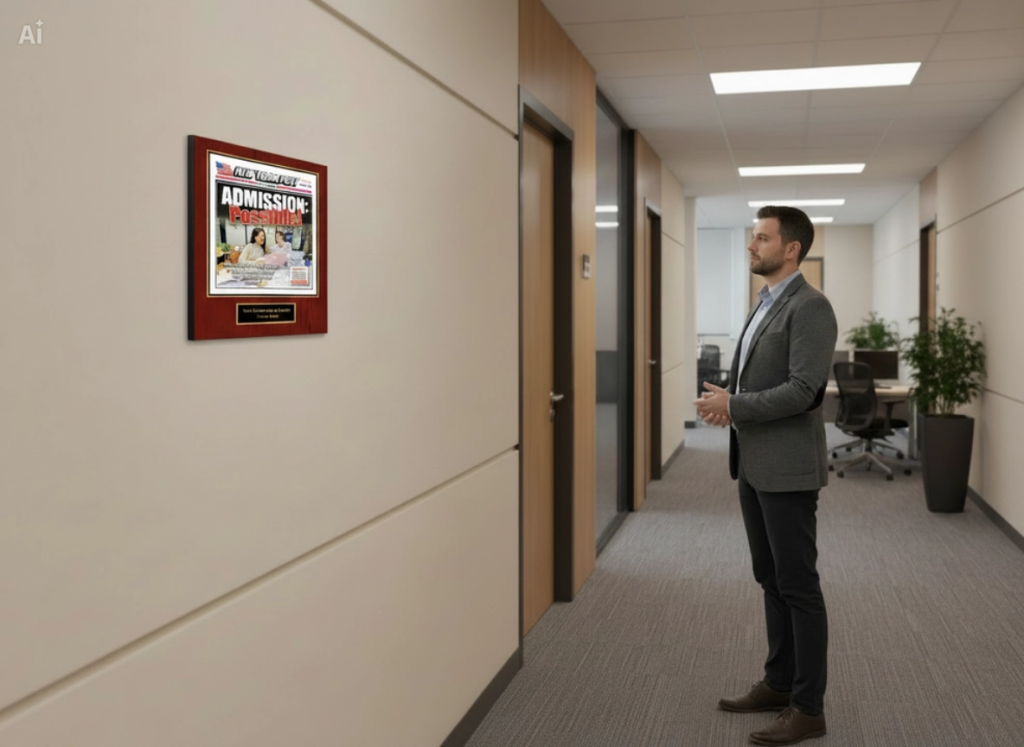
Person standing in front of a recognition plaque displayed on office wall from ThatsGreatNews.com
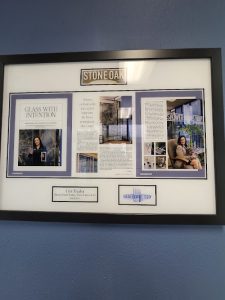
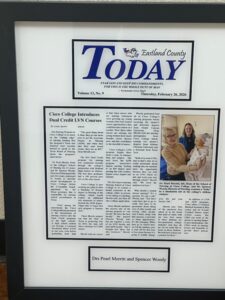
People Rarely Stand Right in Front of It
When someone looks at a plaque, they usually stop a few feet away.
Not close enough to inspect it.
Not far enough to ignore it.
Just enough distance to take it in all at once.
The wall.
The frame.
The article.
The moment.
It Happens Almost Automatically
Across office spaces, home walls, and customer photos shared online, there’s a subtle pattern:
People pause in nearly the same place.
A few steps back.
Slightly angled.
Looking longer than expected.
Not because they planned to.
Because recognition changes how a room is experienced.
The Distance Creates Perspective
Standing too close turns it into detail.
Standing farther back turns it into presence.
That middle distance is where the plaque feels complete.
The headline becomes readable.
The layout feels balanced.
The wall begins to tell a story.
The Pause Is Usually Quiet
Most people don’t announce they’re looking at it.
They simply stop.
A visitor walking through an office.
A family member passing by.
Even the owner themselves during an ordinary day.
The plaque interrupts movement—not loudly, but enough.
Some People Read It Every Time
Even after months or years, many people glance at the same plaque repeatedly.
Not necessarily to reread every word.
But to reconnect with the moment attached to it.
That’s what makes placement matter.
Explore plaque styles designed for long-term display:
https://www.thatsgreatnews.com/Sample2
View custom plaque options:
https://www.thatsgreatnews.com
Eye Level Changes Everything
Most plaques naturally end up near eye level.
Not because of rules.
Because that’s where people engage with them most comfortably.
The moment someone pauses in front of the wall, the plaque meets them directly.
No adjustment needed.
The Space Around It Matters Too
People don’t just notice the plaque.
They notice how the room feels around it.
Open wall space
Lighting
Balance
Positioning
All of it shapes the experience of standing there.
Recognition Becomes Part of Movement
Over time, the plaque becomes integrated into everyday motion.
Walk into the office.
Pass through the hallway.
Sit down at the desk.
And somewhere within those routines, there’s still a glance toward the wall.
Not forced.
Just familiar.
People rarely stand directly against a plaque.
They stand a little back.
Far enough to see the whole thing.
Close enough to feel connected to it.
And sometimes, that small pause says more than the plaque itself.