


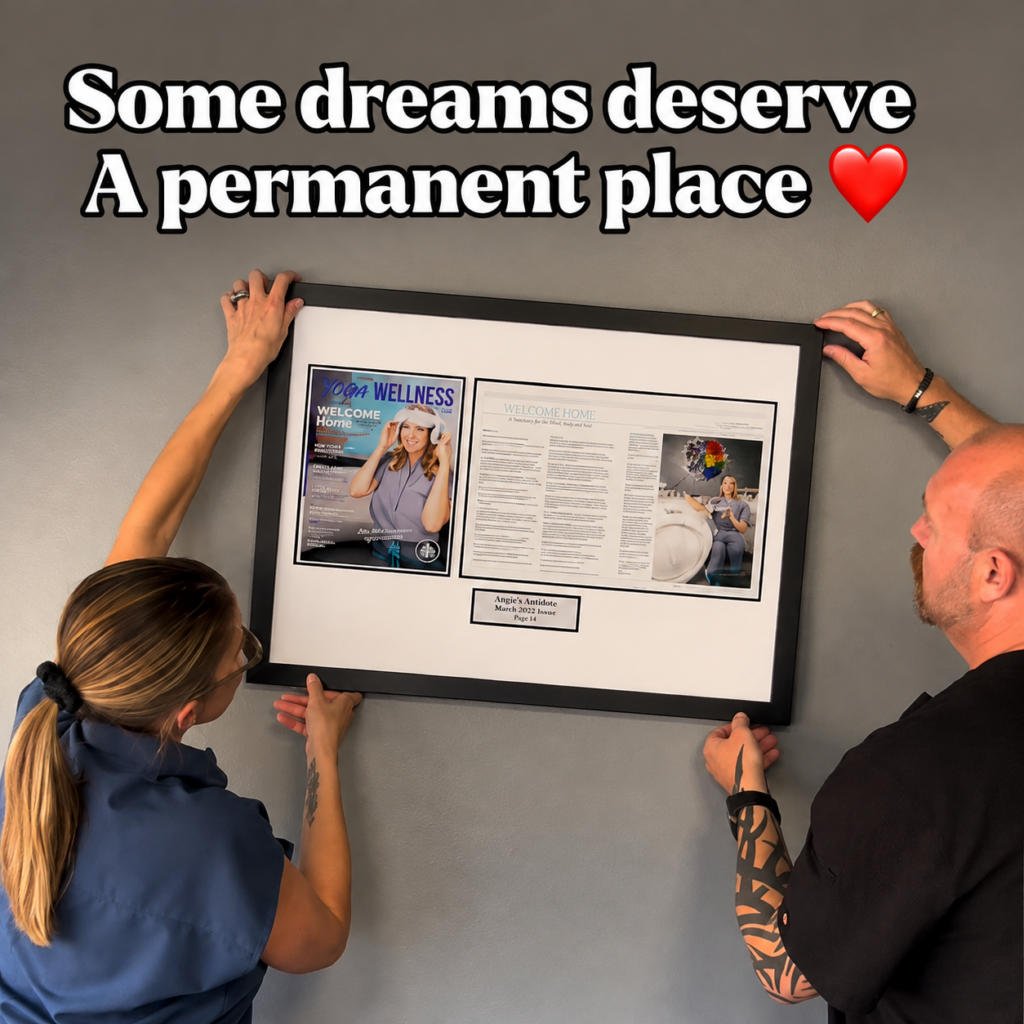
Businesses are choosing framed awards because they want recognition to do more than mark a single moment. A framed award can preserve the achievement, make recognition visible, reinforce company culture, and give employees or business partners something meaningful to keep. For That’s Great News, this idea goes beyond putting a name and award title into a frame. Since 2003, TGN has helped customers turn newspaper articles, magazine features, photographs, professional accomplishments, and other meaningful recognition into physical displays. The company says it has shipped more than 500,000 plaques.
The shift isn’t necessarily about businesses abandoning trophies or certificates. It’s about expecting more from recognition.
Why Are Businesses Choosing Framed Awards?
A traditional award might say:
Employee of the Year
2026
A framed recognition display can tell the person why they earned it.
It can include:
- The employee’s name
- Company logo
- Achievement
- Date
- Photograph
- Project information
- Newspaper coverage
- Magazine coverage
- A personalized message
- Other elements connected to the accomplishment
That difference matters.
A generic award identifies the accomplishment.
A custom framed award can preserve the story behind it.
Current corporate framing providers are also positioning framed recognition around employee awards, company milestones, certifications, and branded recognition programs.
1. Businesses Want Recognition That Lasts
An email can be deleted.
A social media post can disappear into a feed.
A company newsletter eventually gets replaced by the next newsletter.
A framed award doesn’t have that problem.
It can remain on an office wall, reception-area display, conference room, showroom, or employee’s home wall for years.
That’s one reason physical recognition continues to have a place in business.
At TGN, we’ve heard this directly from customers.
One repeat customer explained that their company had used That’s Great News several times over the years. They simply provided a link to an article online, and TGN transformed that recognition into a professionally presented plaque.
The customer described the result as a “priceless memory.”
That’s an important distinction.
They weren’t paying TGN to create the achievement.
They were preserving something that had already happened.
2. Framed Awards Turn Recognition Into a Physical Brand Asset
Businesses spend a lot of time building their reputation.
A newspaper article can establish third-party credibility.
A magazine feature can demonstrate industry recognition.
A major award can document an important milestone.
A photograph can capture a significant moment.
But once the article disappears from the front page or the social post moves down the feed, its visibility changes.
A framed award or recognition display brings that achievement back into the physical environment.
TGN’s Own Frame approach specifically allows businesses to build displays around meaningful content such as articles, photographs, awards, logos, and other recognition.
That means the frame itself becomes part of the company’s storytelling.
3. Employees Can See Recognition Instead of Simply Receiving It
There’s a psychological difference between being told you’re appreciated and seeing a physical reminder of that appreciation.
Imagine walking into an employee’s office and seeing:
Outstanding Customer Service
Presented to Sarah Johnson
2026
That’s already meaningful.
Now imagine the display also includes a photograph, the employee’s achievement, the company logo, and the story behind the recognition.
The award becomes more personal.
It can remind the employee:
My work was noticed.
It can remind coworkers:
This is behavior our company values.
And it can remind visitors:
This company recognizes its people.
Research on employee recognition supports the broader idea that public recognition can influence performance beyond the person who receives the recognition.
That’s one reason the physical visibility of recognition can matter.
4. Companies Are Looking Beyond Generic Trophies
Generic trophies still have their place.
If you’re running a sporting event or annual competition, a traditional trophy can work perfectly well.
But businesses increasingly have achievements that don’t fit neatly into a standard trophy.
Consider:
- A business featured in a newspaper
- A doctor recognized by a publication
- A law firm receiving major community recognition
- An employee completing 25 years with a company
- A company celebrating a major anniversary
- A professional receiving a significant honor
- A business being featured in a magazine
- A team completing a major project
These accomplishments have stories attached to them.
A framed recognition piece can preserve those stories.
That’s where TGN’s experience is different from a traditional trophy-only approach.
5. A Newspaper Article Can Become Corporate Recognition
One of the simplest examples is a published newspaper article.
A business may have been featured because of:
- A new location
- A major milestone
- Community involvement
- Business growth
- An award
- A leadership achievement
- An interesting company story
Instead of putting the newspaper clipping into a drawer, the company can turn it into a professionally presented display.
The original article becomes the centerpiece.
The company logo, photograph, name, date, and additional information can provide context.
The result is a framed business recognition display that can be displayed where employees and customers can see it.
TGN already positions newspaper and magazine coverage as a key use for custom framed recognition.
6. One Customer’s Recognition Started With a Newspaper Article
Kim Taylor provides another real TGN example.
She received an incredible honor and a write-up in her local newspaper.
Rather than simply keeping the newspaper article, she chose to memorialize the accomplishment with a wooden plaque.
She described the ordering process as easy and the staff as professional.
Most importantly, she said she would cherish the plaque for years.
That tells us something important about physical recognition.
The value doesn’t necessarily end when the recognition event ends.
The customer wanted the accomplishment to remain part of her physical surroundings.
7. Businesses Can Combine Multiple Pieces Into One Story
Not every achievement fits into a single photograph or article.
Some stories have several components.
That’s where a larger custom framed award can become particularly useful.
For example:
**Company Logo
- Newspaper Article
- Photograph
- Achievement
- Date
- Personalized Message**
Or:
**Magazine Cover
- Feature Article
- Professional Photograph
- Recognition Statement**
TGN has created projects involving multiple pieces of published material, photographs, and personalized information.
The design challenge isn’t simply fitting everything into one frame.
It’s deciding:
What should people notice first?
That is why TGN’s design guidance recommends starting with the story or achievement, rather than choosing the frame first and forcing the content into it.
8. Framed Awards Can Strengthen Company Culture
Recognition isn’t only about the recipient.
It can communicate with everyone in the organization.
Imagine a company hallway with framed recognition for:
- Customer service
- Innovation
- Leadership
- Teamwork
- Years of service
- Community involvement
- Sales achievement
- Mentoring
The wall becomes more than decoration.
It becomes a visual representation of company values.
Someone walking through that hallway can see what the organization chooses to celebrate.
That’s a powerful use of corporate framed awards.
Instead of simply telling employees what matters, the company can show them.
9. Recognition Can Become Part of the Company’s History
This is one of the strongest reasons for businesses to consider physical recognition.
A company might have been featured in the newspaper ten years ago.
At the time, the article was current news.
Today, it’s history.
The same is true of:
- First locations
- Major expansions
- Significant anniversaries
- Leadership changes
- Major partnerships
- Industry recognition
- Community accomplishments
A framed award can preserve those moments.
Over time, several framed displays can create a visual timeline of the company.
The recognition wall becomes part of the company’s history.
10. Framed Awards Can Recognize More Than Employees
When businesses hear “employee awards,” they shouldn’t assume the recognition has to stop with employees.
Custom framed awards can also recognize:
Business partners
Celebrate a significant partnership or milestone.
Clients
Thank a long-term client or recognize an important relationship.
Executives
Preserve major leadership accomplishments.
Community partners
Recognize organizations that helped make an initiative successful.
Professional achievements
Preserve industry awards, media coverage, or significant career accomplishments.
Company milestones
Celebrate anniversaries, expansions, major projects, and other achievements.
TGN’s Own Frame content identifies business recognition, professional accomplishments, publications, and milestones as potential uses for customized framed displays.
11. A Framed Award Can Give Recognition More Context
Here’s where I think many companies get recognition wrong.
They focus on the title instead of the story.
For example:
Outstanding Achievement Award
That’s nice.
But what did the person achieve?
What happened?
Why was it important?
What made the recognition meaningful?
A better framed recognition piece might show:
Outstanding Achievement Award
Presented to John Smith for leading the successful expansion of the company’s community outreach program in 2026.
Now the recognition has context.
The employee isn’t simply being told they won.
They’re being reminded what they accomplished.
12. The Frame Should Support the Achievement
A common mistake is starting with the frame.
The better approach is to start with the content.
Ask:
What am I preserving?
Then determine:
- How large should the display be?
- What should be most prominent?
- How many photographs are needed?
- Should the company logo be included?
- Does the article need to remain readable?
- Where will the award be displayed?
- What frame style fits the environment?
TGN’s current Own Frame guidance emphasizes this story-first approach.
That is particularly important when dealing with newspaper or magazine articles because shrinking the content too much can make the original recognition difficult to read.
13. Businesses Can Use Recognition as Part of Their Physical Branding
Your office communicates something about your company before anyone says a word.
Reception areas communicate professionalism.
Conference rooms communicate culture.
Executive offices communicate leadership.
Recognition walls communicate achievement.
A professionally designed framed award can contribute to all three.
For example, a reception area might display:
Company milestone + newspaper article + photograph
An employee area might display:
Years of service + employee photograph + personalized message
An executive office might display:
Magazine feature + professional photograph + company branding
The recognition becomes part of the environment rather than something hidden away.
TGN has specifically identified this connection between Own Frame Awards and physical business branding.
14. Physical Recognition and Digital Recognition Can Work Together
Choosing framed awards doesn’t mean abandoning digital recognition.
In fact, businesses can use both.
Digital recognition
Use it for:
- Company announcements
- Slack or Teams
- Internal newsletters
- Social media
Physical recognition
Use it for:
- Office displays
- Recognition walls
- Employee keepsakes
- Reception areas
- Conference rooms
- Long-term company history
A company could announce an employee’s achievement digitally and then present a physical framed award.
One creates immediate visibility.
The other creates permanence.
15. What Businesses Shouldn’t Expect From a Framed Award
A framed award isn’t a magic solution for employee engagement.
It won’t fix poor management.
It won’t replace fair compensation.
It won’t solve a toxic workplace.
And companies shouldn’t claim that a plaque alone caused improvements in retention, productivity, or morale without actual data.
That’s important.
Recognition works best when it is part of a larger culture in which employees genuinely feel valued.
The physical award is one tool.
Its strength is that it makes that recognition tangible and lasting.
The TGN Perspective: Recognition That Stays
That’s Great News has been helping customers preserve meaningful recognition since 2003, with more than 500,000 plaques shipped.
Over the years, the company has worked with customers who wanted to preserve articles, photographs, professional achievements, and other meaningful moments.
One repeat customer summed up the reason particularly well by describing the finished plaque as a “priceless memory.”
That’s really what physical recognition can accomplish.
The award doesn’t create the accomplishment.
It gives the accomplishment somewhere to live.
Why Businesses Are Really Switching to Framed Awards
The strongest reason isn’t that framed awards are newer.
It’s not that traditional trophies are suddenly irrelevant.
And it’s not simply that frames look more professional.
Businesses are choosing custom framed awards because recognition is becoming more personal, more visual, and more connected to the story behind an accomplishment.
A company can recognize someone with a title.
Or it can preserve the achievement itself.
A certificate can say someone was recognized.
A trophy can say someone won.
A framed award can say:
Here’s what happened.
Here’s who accomplished it.
Here’s why it mattered.
And years later, someone can still see it.
How to Decide If a Framed Award Is Right for Your Business
Consider a framed award when the achievement:
- Represents a major milestone
- Has a meaningful story behind it
- Includes an article or photograph worth preserving
- Represents years of service
- Deserves permanent visibility
- Should be displayed in an office or reception area
- Reflects an important company value
- Is something the recipient will likely want to keep
If the accomplishment matters today and you expect it to matter years from now, it’s worth considering how you want that recognition preserved.
Frequently Asked Questions
What are framed awards used for?
Businesses use framed awards for employee recognition, professional achievements, company milestones, media coverage, years of service, business anniversaries, client recognition, and other accomplishments.
Are framed awards better than trophies?
Not necessarily. They serve different purposes. A traditional trophy can be excellent for competitions, while a framed award can be particularly effective when the company wants to preserve a story, photograph, article, or detailed achievement.
Can a newspaper article be turned into a framed award?
Yes. A newspaper article can be incorporated into a custom framed recognition display along with photographs, logos, dates, headlines, and personalized information. TGN specifically offers content around preserving published recognition this way.
Where should a business display framed awards?
Common locations include reception areas, offices, conference rooms, hallways, recognition walls, waiting rooms, and other areas where employees, customers, and visitors can see them.
What should be included in a corporate framed award?
Depending on the purpose, a framed award can include the recipient’s name, company logo, achievement, date, photograph, article, publication information, personalized message, or other details connected to the recognition.
The Best Recognition Doesn’t Have to Disappear
Businesses don’t have to choose between traditional awards and modern recognition.
They can choose recognition that fits the achievement.
For some accomplishments, that’s a trophy.
For others, it’s a certificate.
For the achievements that deserve a permanent story, it may be a custom framed award.
That’s the real reason businesses are looking more closely at framed recognition.
They aren’t simply looking for something to hand someone. They’re looking for something worth keeping.
And when the frame preserves the actual story behind the achievement, the award becomes more than recognition.