Employee recognition awards work because they do more than reward performance. They tell employees that their contribution was noticed, valued, and worth remembering. Research backs this up: a field experiment involving more than 300 workers found that public recognition increased subsequent performance, while another field experiment found that symbolic awards increased performance by about 12%. More recent 2026 research also found that a public recognition program increased employees’ willingness to share expertise by 21% and mentoring by 12%.
But there’s an important distinction that many articles about employee recognition overlook.
Recognition isn’t only about the moment an employee receives the award. It’s also about what remains after that moment.
That’s where a physical recognition award can have a different psychological effect.
The Psychology of Being Recognized at Work
Think about the difference between these two experiences.
A manager says:
“Great job on that project.”
That’s meaningful.
An employee receives an email saying:
“Congratulations on being Employee of the Month.”
That’s meaningful too.
But now imagine receiving a professionally produced recognition award with your name, achievement, company, date, photograph, or story, and being able to keep it in your office or home.
The recognition becomes tangible.
It can be seen again.
And that matters because recognition is partly about visibility.
Research on workplace awards has found that employer recognition and visibility can improve performance, while social comparison can sometimes have the opposite effect.
The lesson isn’t simply “give everyone a trophy.”
It’s:
Make the right accomplishments visible for the right reasons.
1. Recognition Satisfies the Need to Feel Valued
Employees don’t want to feel like interchangeable parts of a company.
They want to know their contribution matters.
A recognition award communicates something simple:
We noticed what you did.
That message can be surprisingly powerful.
The employee isn’t only receiving an object.
They’re receiving information about how the organization sees them.
For example:
Outstanding Customer Service
doesn’t simply describe an award.
It tells the recipient:
Your behavior made a difference.
That psychological distinction is important.
2. Awards Reinforce a Sense of Competence
People generally want to feel capable at what they do.
When an employee receives recognition for solving a difficult problem, helping customers, leading a team, or achieving an important goal, the award reinforces:
“I’m good at this.”
That sense of competence can become particularly meaningful when the recognition is specific.
Compare:
Great Employee
with:
Outstanding Customer Service — Recognized for consistently exceeding customer expectations in 2026.
The second one explains why the person is being recognized.
That’s important.
A good recognition award should not leave the employee wondering what behavior earned it.
3. Recognition Makes Company Values Visible
Here’s one of the most useful psychological effects of employee awards.
An award doesn’t communicate only with the person receiving it.
Everyone else sees it too.
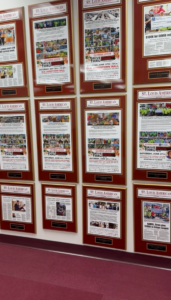
Imagine an office where the walls display recognition for:
- Customer service
- Innovation
- Leadership
- Teamwork
- Reliability
- Mentoring
- Community involvement
- Years of service
Those awards become visual examples of what the organization values.
A framed recognition piece can effectively say:
This is the kind of behavior we appreciate here.
That’s consistent with research showing that recognition can affect employees beyond the actual recipient. In one field experiment, recognition increased subsequent performance, with much of the increase coming from employees who didn’t receive the recognition themselves.
That’s a fascinating part of the psychology.
The award can motivate the person who receives it and influence the people watching it happen.
4. Public Recognition Creates Visibility
There’s a reason companies put awards in reception areas, conference rooms, hallways, and offices.
Visibility changes the meaning of recognition.
A private “thank you” is personal.
A recognition award displayed publicly is both personal and social.
Research on awards has identified visibility and employer recognition as important mechanisms through which awards can affect employee performance.
But there’s an important caveat.
Public recognition should not become public embarrassment.
Not everyone wants to be ranked against coworkers.
Not every employee wants their performance publicly compared.
The better approach is to make the recognition about the contribution, not about humiliating everyone who wasn’t selected.
5. A Physical Award Can Make Recognition Last Longer
This is where That’s Great News has a particularly relevant perspective.
For more than two decades, TGN has been creating physical recognition products. The company was founded in 2003 and has sold more than 500,000 plaques.
We’ve seen the difference between recognition that exists only as a message and recognition that becomes something people can keep.
One repeat customer told TGN:
“We always receive a very professional-looking plaque, with little effort on our part.”
The customer explained that they simply provided a link to the article and TGN turned it into the finished plaque.
Their description of the result was especially telling:
“A priceless memory.”
That phrase gets to the heart of physical recognition.
The plaque isn’t the accomplishment.
It preserves the accomplishment.
6. Physical Recognition Gives Employees Something to Keep
Another TGN customer, Kim Taylor, had received an honor and a write-up in her local newspaper.
She chose to memorialize that recognition with a wooden plaque.
Her response was:
“I will cherish my beautiful wooden plaque for years to come!”
Although this isn’t specifically an employee-recognition case, it demonstrates an important principle that applies to workplace recognition:
People assign meaning to physical objects that preserve important accomplishments.
An employee award can eventually become something they take home.
It can sit in their office.
It can become part of a recognition wall.
It can even become something their family sees years later.
The moment doesn’t have to disappear when the ceremony ends.
7. The Physical Object Becomes a Reminder
Imagine an employee receiving recognition on Friday.
By Monday, they’re back to work.
Six months later, they’ve dealt with difficult customers, deadlines, meetings, and another hundred problems.
The award is still sitting there.
That physical reminder can reconnect the employee with the accomplishment.
They don’t need to remember the exact words their manager used.
They can see the evidence of what they accomplished.
This is one of the strongest reasons I would argue for physical employee recognition.
Digital recognition is excellent for speed.
Physical recognition is excellent for permanence.
8. Recognition Can Influence People Who Didn’t Receive the Award
This is one of the most interesting findings in recognition research.
A study involving more than 300 workers found that public recognition increased subsequent performance, and surprisingly, much of the increase was driven by employees who didn’t receive the recognition.
Why?
The researchers suggest mechanisms involving reciprocity and conformity.
In simpler terms:
People notice what gets recognized.
They learn what the organization values.
They may think:
“That’s the kind of contribution that gets noticed here.”
That’s a powerful reason to design recognition programs carefully.
Your employee awards are communicating with the entire workforce.
9. Recognition Can Encourage Employees to Help Each Other
Here’s a particularly interesting 2026 development.
A study published in July 2026 examined a public recognition program designed to encourage employees to help coworkers.
The researchers found that recognition increased employees’ willingness to share expertise by 21% and mentor by 12%. The changes also improved productivity among junior employees who relied more heavily on peer guidance.
That suggests recognition doesn’t have to be limited to:
Highest sales
or
Most production
Companies can recognize behaviors that make the entire organization stronger.
For example:
“Outstanding Mentor”
“Customer Champion”
“Team Builder”
“Knowledge Sharer”
“Leadership Through Service”
Those awards tell employees that how they help the organization matters, not just how much they personally produce.
10. The Award Should Tell the Employee Exactly Why They Were Chosen
This is one place where I think companies can improve recognition programs.
Don’t just write:
Employee Excellence Award
Give the employee context.
For example:
Customer Excellence Award
Presented to Sarah Johnson for her outstanding commitment to helping customers and consistently exceeding service expectations.
Now the award documents the behavior.
Years later, the employee can still understand why they received it.
That’s especially valuable with a physical award because the wording can remain visible for years.
11. Don’t Turn Recognition Into a Popularity Contest
Here’s the other side of the psychology.
Recognition can motivate.
But poorly designed recognition can also create resentment.
Research has found that while recognition and visibility can improve performance, social comparison can reduce performance, particularly for some lower-performing employees.
That means companies should be careful about programs that constantly communicate:
“These are the winners. Everyone else lost.”
A better recognition system can celebrate different types of contributions.
Instead of only having:
Top Salesperson
consider:
Best Customer Advocate
Outstanding Mentor
Innovation Award
Team Leadership Award
Service Excellence Award
Most Improved
Years of Service
This creates more opportunities to recognize meaningful behavior.
12. Recognition Should Be Specific, Not Automatic
If everyone receives the exact same award every month, the award can eventually lose meaning.
Recognition works partly because it communicates that something was noticed.
That doesn’t mean recognition needs to be rare.
It means it should be meaningful.
The employee should be able to answer:
What did I do to earn this?
And their coworkers should be able to answer:
Why was this person recognized?
13. A Framed Award Can Become Part of Company Culture
Now consider what happens when recognition isn’t stored in a drawer.
It’s displayed.
A company might have a recognition wall containing:
- Employee of the Year
- Customer Service Awards
- Leadership Awards
- Years-of-Service Awards
- Innovation Awards
- Team Achievement Awards
- Community Service Recognition
The wall becomes a physical representation of the company’s culture.
It tells new employees:
These are the behaviors this company celebrates.
It tells existing employees:
Your contributions can become part of our history.
And it tells visitors:
These people matter here.
That’s a much richer function for an award than simply being a trophy.
14. The Best Employee Awards Preserve the Story
This is the biggest lesson I would bring from TGN’s experience.
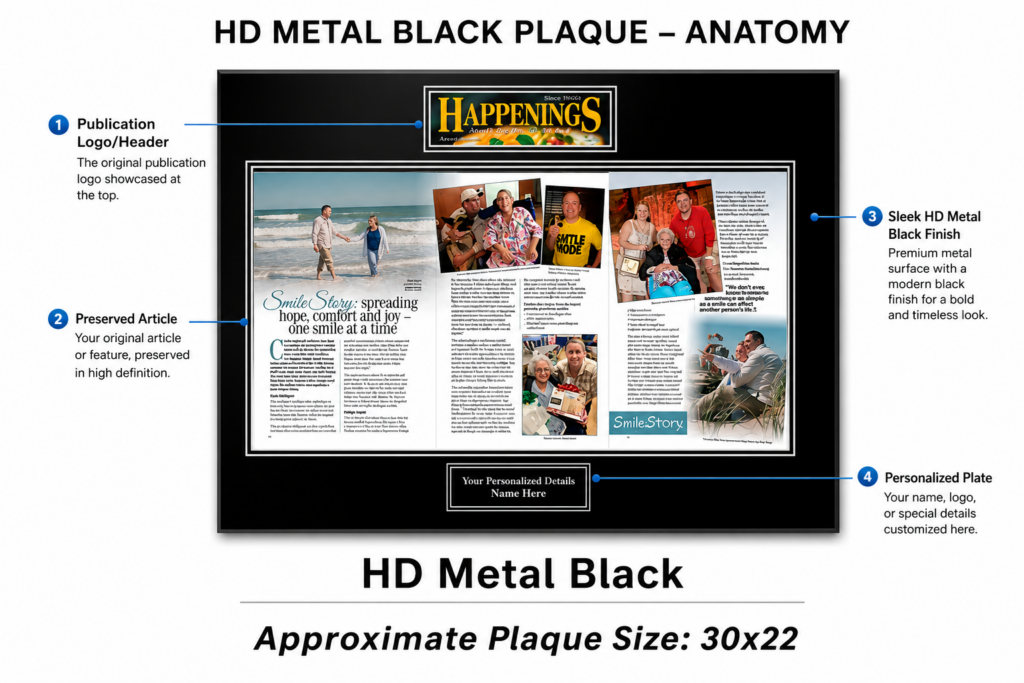
A generic trophy might say:
Employee of the Year — 2026
A custom recognition piece can tell more of the story.
It could include:
- Employee name
- Company name
- Achievement
- Date
- Photograph
- Project information
- Company logo
- Newspaper or magazine coverage
- A personalized message
TGN’s own approach to Own Frame Awards is to start with the story or achievement rather than starting with the frame.
That philosophy works particularly well for employee recognition.
Don’t start by asking:
“What trophy should we buy?”
Start with:
“What do we want this employee to remember?”
15. Why Physical Recognition Can Be Different From a Digital “Thank You”
A Slack message can disappear.
An email can get buried.
A company newsletter can be forgotten.
A digital recognition post can eventually be difficult to find.
A physical recognition award doesn’t require an employee to search for it.
It’s there.
That doesn’t make digital recognition unimportant.
In fact, I think the strongest employee recognition programs can use both.
Digital recognition
Good for:
- Immediate acknowledgment
- Team communication
- Company-wide announcements
- Speed
- Social sharing
Physical recognition
Good for:
- Permanence
- Display
- Personal ownership
- Long-term remembrance
- Office visibility
The two approaches can reinforce each other.
A Better Employee Recognition Formula
If I were building an employee recognition program, I wouldn’t make the award the entire program.
I’d use this sequence:
Notice the behavior ? Explain why it matters ? Recognize the person ? Make the recognition visible ? Preserve the achievement.
The award becomes the physical evidence of that process.
And that’s where a custom framed recognition piece can have an advantage over a generic certificate.
What I Think Companies Get Wrong
Here’s the honest opinion I’d put behind this article:
Companies sometimes confuse recognition with rewards.
A reward says:
“Here’s something you earned.”
Recognition says:
“We saw what you did, and it mattered.”
Those aren’t exactly the same message.
Money can be valuable.
Bonuses can be valuable.
Gift cards can be valuable.
But an employee recognition award has a different purpose.
It communicates status, appreciation, identity, and belonging.
Research on symbolic awards supports this distinction: one field experiment found that a purely symbolic award increased worker performance by about 12%, demonstrating that the effect wasn’t dependent on a material prize.
The TGN Perspective: Recognition That Stays
That’s Great News has been creating recognition products since 2003, and the company has sold more than 500,000 plaques.
That gives us a practical perspective that goes beyond the psychology textbook.
We’ve seen people preserve newspaper articles, magazine features, professional accomplishments, photographs, and other recognition because they don’t want the moment to disappear.
The same principle can apply to employees.
An employee who receives a framed recognition award doesn’t just receive congratulations.
They receive something that can remain visible after the congratulations are over.
How to Make an Employee Recognition Award More Meaningful
Make it specific
Explain exactly what the employee accomplished.
Include the employee’s name
Personalization matters.
Include the date
It turns the award into a historical record.
Consider a photograph
A photograph can make the recognition much more personal.
Include the company
Connect the achievement to the organization.
Display it appropriately
Give the award a place where it can actually be seen.
Recognize different types of contributions
Don’t make recognition exclusively about sales or productivity.
Avoid excessive competition
Recognition should motivate rather than humiliate.
Make the award worth keeping
If the employee is going to have it for years, presentation matters.
Frequently Asked Questions
Do employee recognition awards really motivate employees?
Research suggests they can. A controlled field experiment found that public recognition increased subsequent performance, while another field experiment found that symbolic awards increased performance by approximately 12%.
Why does public recognition matter?
Public recognition provides visibility. It communicates both to the recipient and to coworkers that a particular contribution is valued. Research has found that recognition can affect the performance of people who did not receive the award themselves.
Are physical employee awards better than digital recognition?
Not necessarily “better”—they serve different purposes. Digital recognition is immediate and easy to share, while a physical award provides a lasting object that can remain visible and personally meaningful.
What should an employee recognition award say?
It should identify the employee, the achievement, the date, and why the person was recognized. Specific recognition is generally more meaningful than vague praise.
Should every employee receive an award?
Not necessarily. Recognition should be meaningful, but organizations can create multiple award categories so that different valuable behaviors—not just top sales or individual performance—can be recognized.
Can employee recognition awards improve teamwork?
They can support teamwork when companies recognize collaborative behaviors such as mentoring, knowledge sharing, customer service, and helping coworkers. A 2026 field study found that a public recognition program increased expertise sharing by 21% and mentoring by 12%.
The Real Psychology Behind a Recognition Award
The most important thing an employee recognition award says isn’t:
“You won.”
It’s:
“We noticed.”
And that message can affect how employees see themselves, how coworkers understand company values, and how organizations reinforce the behaviors they want repeated.
A digital message can deliver that recognition quickly.
A physical award can keep delivering the reminder.
That’s the opportunity behind framed employee recognition awards.
The goal isn’t to give employees another object to put on a shelf.
It’s to give an important accomplishment a permanent place where it can be remembered.