
Yes, but the safest approach depends on whether you want to preserve the original newspaper as an artifact or create a display of the article. Newsprint is fragile and can yellow, become brittle, and deteriorate with exposure to light and environmental conditions. The National Archives actually recommends using a copy for display when the information in the clipping matters more than preserving the original paper itself.
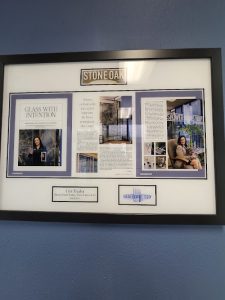
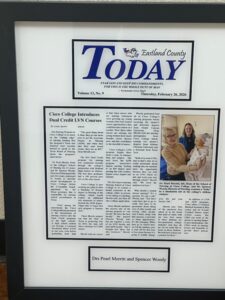
That distinction is important at That’s Great News. Instead of requiring customers to permanently frame their original newspaper clipping, TGN can work from the article and create a reproduction on a more suitable display material. TGN says that 99% of the time it already has the article in-house through its publication library, then prints the article on one of its substrates, mats it, mounts it to a custom plaque, and finishes the edges to create a framed appearance.
So the answer isn’t simply “put the clipping behind glass.”
The better question is:
Do you want to preserve the original piece of newsprint, or preserve the story and achievement it represents?
Why Newspaper Clippings Are Difficult to Preserve
Newspaper paper was never really designed to last for generations.
The National Archives explains that much newsprint is made from wood pulp containing impurities that contribute to discoloration and acidity. Over time, this can make the paper brittle and more likely to tear. Light, humidity, heat, and pollutants can accelerate the deterioration.
That’s why an old newspaper clipping can look fine when you first frame it but look noticeably different years later.
You may eventually see:
- Yellowing
- Browning
- Brittle edges
- Fading ink
- Cracks along old folds
- Tears around damaged areas
- Discoloration
The problem isn’t necessarily the frame itself.
It’s the newspaper.
A frame can protect a clipping from being handled, but it doesn’t magically stop newsprint from aging.
Can You Put a Newspaper Clipping in a Regular Frame?
You can, but a standard frame isn’t necessarily a preservation solution.
If you’re simply looking for an inexpensive way to display an article for a short period, a regular frame may be perfectly adequate.
But if the article is important to you, there are several things to consider.
The Canadian Conservation Institute recommends appropriate housing and materials for newspaper clippings, while the University of Illinois preservation guidance specifically recommends acid-free backing and matting and UV-protective glazing. It also advises keeping framed newspaper away from direct sunlight.
The National Archives goes even further for valuable originals: it recommends protecting newspapers from light and says to use a copy for display rather than exposing the original.
That’s an important point that many simple “how to frame a newspaper” articles overlook.
The Original Newspaper Isn’t Always What You Should Frame
This is where our experience at TGN changes the answer.
A customer may say:
“I want to frame this newspaper article.”
But what they often really mean is:
“I want to preserve this achievement.”
Those are not necessarily the same thing.
If the original newspaper is irreplaceable, you may actually want to protect the original separately and create a display from a reproduction.
That’s exactly the distinction that makes a custom article display useful.
TGN’s process takes the article and reproduces it on a display substrate rather than simply putting the fragile original clipping into a retail frame. TGN says it can work from an actual clipping or an online article, and that it has a subscription library covering thousands of publications.
That means the original article doesn’t have to become the permanent centerpiece of the wall display.
A Real TGN Example: Mindi DeLancey
One of the best examples we have is Mindi DeLancey of Cornerstone Primary Care.
Mindi had an article about her clinic published in The Pine Belt News.
Her first thought was simple:
Cut out the article and frame it herself.
There’s nothing wrong with that approach.
But after seeing what TGN could do with the article, she chose to have it professionally presented instead.
Her experience illustrates something important about newspaper clipping preservation.
The value isn’t necessarily in keeping the exact piece of newsprint on the wall.
The value is in preserving the recognition and presenting it in a way that feels worthy of the accomplishment. TGN’s own account of the project describes the finished plaque as a more polished and professional presentation than simply framing the clipping.
What Happens to the Article at TGN?
This is one of the areas where we can give readers an answer based on actual TGN experience instead of generic framing advice.
TGN’s article-framing process includes:
- Locating the article
- Printing the article onto a suitable substrate
- Matting the article
- Mounting it to a custom plaque
- Beveling and trimming the outside edges
- Creating space for a personalized engraved nameplate
TGN says 99% of the time it already has the article in-house, thanks to its subscription library of thousands of publications.
That matters because customers don’t necessarily have to mail away the only copy of an important newspaper clipping.
And if the article is available online, TGN can also work from the link.
What If I Want to Preserve the Original Newspaper?
If the original itself has historical or sentimental value, treat it differently from a display copy.
The National Archives recommends keeping valuable newspapers cool and dry, protecting them from light, and storing them in appropriate archival materials. It specifically warns against laminating or using pressure-sensitive tape on papers that you want to preserve.
It also recommends not displaying valuable original newsprint for long periods because light can darken and weaken it. A reproduction can be used for display instead.
So if your clipping is:
- An original historical newspaper
- A family heirloom
- A rare edition
- An irreplaceable document
- Extremely old or already brittle
I’d take the conservative approach:
Preserve the original separately and display a high-quality reproduction.
That’s safer than assuming a beautiful frame automatically makes the original archival.
What About Tape, Glue, or Laminating the Clipping?
This is one place where you should be careful.
Don’t use ordinary tape or glue directly on an important original clipping.
The National Archives specifically warns against pressure-sensitive mending tape and other adhesives on newspapers you want to preserve.
And while lamination may seem like an easy way to protect a clipping, archival preservation guidance does not recommend laminating original newspapers that you want to preserve.
This is why I would not tell a customer:
“Just laminate your newspaper and put it in a frame.”
It sounds simple, but it isn’t good preservation advice for an irreplaceable original.
What About UV Protection?
If you’re displaying an original or reproduction behind glazing, light still matters.
The University of Illinois recommends UV-protective glass and keeping framed newspaper away from direct sunlight.
That’s because sunlight doesn’t just make a newspaper look old.
It can accelerate fading and deterioration.
So think about where the finished display will hang.
A hallway away from direct sunlight is very different from a wall directly across from a sunny window.
Don’t Make the Article Too Small Just to Fit the Frame
This is another lesson from TGN’s experience that gets missed in basic preservation articles.
A newspaper article isn’t valuable just because you managed to fit the entire thing inside a frame.
It has to remain meaningful and readable.
A typical newspaper article can contain:
- A headline
- Multiple columns
- Photographs
- Captions
- A publication name
- Dates
- Logos
- Names
- Additional information
If you shrink everything down too far, you’ve technically preserved the article but made it difficult for anyone to appreciate.
That’s why TGN’s approach is to design around the content.
The frame should accommodate the story.
The story shouldn’t be forced into whatever frame happens to be available.
A Newspaper Article Can Become More Than a Clipping
This is where I think people sometimes underestimate what they have.
A newspaper article might represent:
- A business opening
- A professional achievement
- A community award
- A major milestone
- A charitable accomplishment
- A company anniversary
- A personal achievement
- A new business feature
- An industry recognition
- A career milestone
The piece of paper is simply the evidence.
The achievement is the real thing you’re preserving.
That is why TGN’s Own Frame approach can include more than the article itself.
You might include:
Article + photograph
Article + company logo
Article + photograph + personalized nameplate
Multiple articles + photographs
Front page + additional recognition
The goal is to create a display that tells someone what happened without requiring them to know the backstory.
The Best Newspaper Frame Starts With the Story
This is probably the biggest point I’d want a reader to take away.
Don’t start with:
“What size frame should I buy?”
Start with:
“What am I trying to preserve?”
If you’re simply protecting a certificate, a standard frame might be all you need.
If you’re preserving a newspaper story that represents a major accomplishment, you may want something more intentional.
At TGN, we’ve found that the best results come from starting with the article or achievement and then determining the layout and presentation.
That approach also gives you more flexibility with the frame.
A Repeat Customer Shows Why This Matters
TGN has customers who have returned several times over the years to preserve different achievements.
One repeat customer described the experience simply: they provide a link to the actual article, TGN creates the finished plaque, and the result becomes what they called a “priceless memory.”
That’s an important distinction.
The customer wasn’t just trying to protect a piece of paper.
They were creating something they wanted to keep.
And that is ultimately what makes newspaper article framing worthwhile.
Should You Frame the Original Clipping or a Copy?
Here’s my practical recommendation:
Frame the original when:
- The newspaper isn’t particularly fragile.
- You’re comfortable with normal aging.
- The historical value of the physical paper is important.
- You’ve used appropriate archival framing materials.
- The display can be kept away from direct sunlight.
Consider framing a reproduction when:
- The original is irreplaceable.
- The paper is already brittle.
- You want the display to last without exposing the original.
- You want to enlarge or improve the presentation.
- You want to add photographs or other design elements.
- You want a finished recognition piece rather than a basic newspaper frame.
For particularly valuable originals, professional conservation advice is worth considering.
The Advantage of Starting With an Online Article
One of the biggest changes in newspaper preservation is that the article doesn’t necessarily have to begin as a physical clipping.
TGN can often work from the online article.
That means you can preserve the story without sacrificing the original newspaper.
You can keep the physical newspaper safely stored while using the article to create a professional display.
TGN’s current website describes its process as:
Request a Free Preview ? Review the Preview ? Select Options & Order.
That’s a useful advantage because you’re able to think about the finished presentation before committing to it.
See What Your Newspaper Article Could Look Like
If you’re not sure whether your newspaper clipping would work as a framed display, you don’t have to guess.
That’s Great News offers a free preview so you can see a proposed presentation of your actual article before deciding how you want to proceed.
See the Free Preview Frame Lander
This is also the strongest internal link for this article because someone searching “frame newspaper clipping” is already close to considering how their own article could be displayed.
Instead of sending them to a generic product page, the free preview moves them directly toward seeing their own achievement.
What Makes a Newspaper Article Worth Framing?
The answer isn’t the age of the newspaper.
It isn’t the price of the frame.
And it isn’t whether the clipping looks good by itself.
It’s what the article represents.
A newspaper clipping might be worth preserving because it marks the day a business received major recognition.
It might document someone’s professional accomplishment.
It might tell the story of a community achievement.
It might capture a milestone that won’t happen again.
That’s why I don’t think the goal should simply be:
“How do I keep this newspaper from getting damaged?”
The better question is:
“How do I preserve what this newspaper represents?”
The Bottom Line
Yes, you can frame a newspaper clipping without unnecessarily damaging it, but framing the original isn’t always the best preservation strategy.
If the physical newspaper itself is historically important, protect the original using archival practices and consider keeping it out of prolonged light exposure. If what matters most is the story and achievement contained in the article, creating a high-quality reproduction for display can be a much more practical approach.
That’s the distinction I would make based on TGN’s experience.
Don’t sacrifice the original just to put the story on the wall. Preserve the original, then create a display worthy of the achievement.
And if you’d like to see what your own newspaper article could look like, you can start with a free preview: