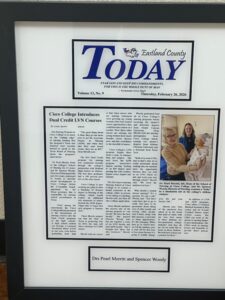
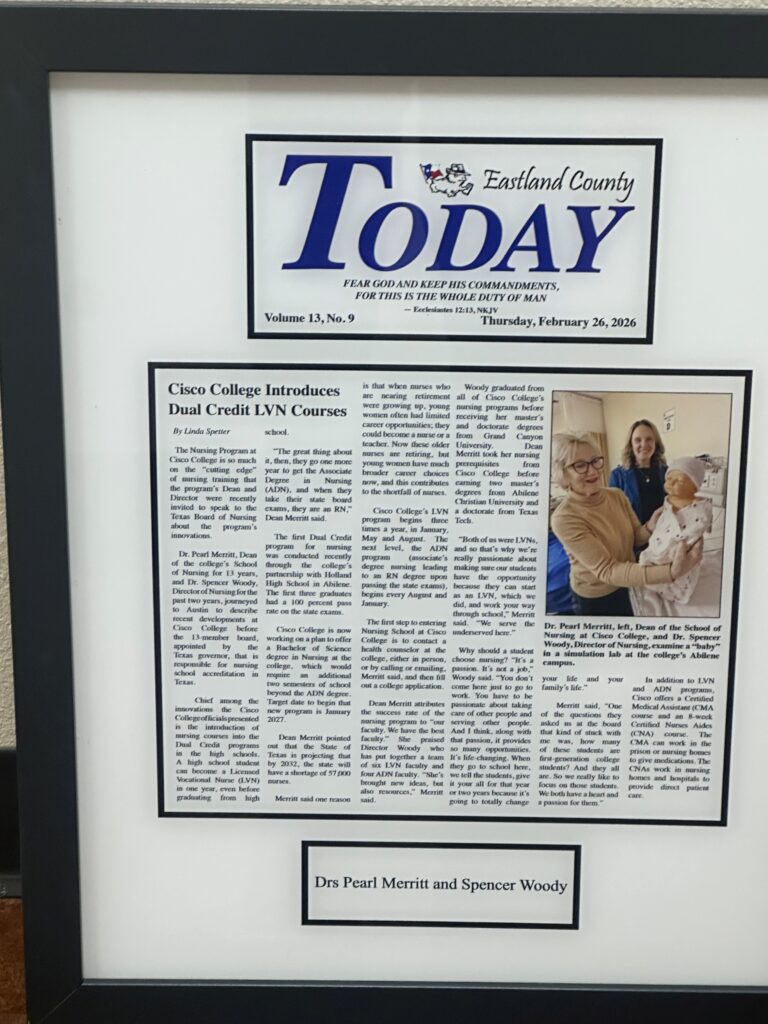
A framed achievement can do more than fill an empty wall. It can make an office feel more established, personal, and connected to the work happening inside it. A newspaper feature, professional accomplishment, employee recognition, company milestone, or meaningful award becomes part of the environment rather than something that lives in a drawer, email, or digital folder. For That’s Great News, this is one of the reasons physical recognition continues to matter after the original achievement has passed. TGN has been turning achievements, published articles, photographs, and professional recognition into physical displays since 2003 and says it has shipped more than 500,000 plaques.
The important part, however, isn’t simply putting a frame on the wall.
It’s choosing something worth putting on the wall.
Your Office Tells a Story Before You Do
Walk into an office and you can usually learn something about the person or company without asking a single question.
You might see:
- Professional certifications
- Customer awards
- Industry recognition
- Newspaper or magazine features
- Photos from important milestones
- Employee achievements
- Company accomplishments
- Awards from professional organizations
Those things aren’t just decorations.
They are evidence of a history.
A framed achievement gives that history a physical place in the office.
That’s different from having the same achievement listed on a website or buried in an email.
One current framing guide makes a similar point about corporate displays, recommending that certificates and awards be organized intentionally rather than simply placed wherever there is available wall space.
But I think there’s another step that often gets missed:
Don’t start by asking what will look good on the wall. Start by asking what story deserves to be there.
A Framed Achievement Can Become a Conversation Starter
One of the practical advantages of displaying recognition in an office is that visitors can see it.
A customer might ask:
“What’s that article about?”
A prospective client might notice a professional accomplishment.
An employee might stop to look at another employee’s recognition.
A new team member might see the kinds of accomplishments the company celebrates.
The frame creates an opening for a conversation that might never happen if the recognition stays digital.
This is especially useful for achievements that already have a story attached to them.
For example, a newspaper feature isn’t simply a piece of paper.
It represents something that happened.
Someone earned the recognition.
Someone wrote the story.
The publication decided the achievement was worth covering.
Framing it preserves that context.
The Difference Between Decoration and Recognition
This is where I think businesses sometimes get it wrong.
If the goal is simply to make an office look attractive, there are thousands of things you can put on the wall.
Artwork.
Photography.
Decorative signs.
Generic motivational quotes.
But a framed achievement is different because it has meaning specific to the people in that office.
It isn’t decoration chosen because it looks good.
It looks good because it represents something that happened.
That’s a much stronger reason to give something permanent wall space.
Your Recognition Doesn’t Have to Look Like a Certificate
This is another area where TGN’s experience changes the conversation.
When people hear “framed achievement,” they may picture a standard certificate inside a basic frame.
That can certainly work.
But that’s only one option.
A meaningful recognition display could combine:
A newspaper article + photograph + company logo
or
A magazine feature + professional photograph + personalized nameplate
or
Multiple articles + photographs + company branding
or simply
One important achievement presented as the focal point.
TGN’s approach is to start with the story and then determine how that story should be presented.
That is why an Own Frame Award doesn’t have to feel like something pulled from an office-supply catalog.
It can be designed around the achievement.
One TGN Customer Didn’t Want to Just Keep the Article
One of the clearest examples comes from Mindi DeLancey of Cornerstone Primary Care.
After her clinic was featured in The Pine Belt News, she had considered simply cutting out the article and framing it herself.
That’s a perfectly reasonable option.
But she ultimately chose to have the recognition professionally turned into a plaque.
The important distinction is not that one method is automatically “right” and the other is “wrong.”
It’s that the achievement meant enough to her that she wanted something more intentional than simply keeping the newspaper clipping.
That is the decision many people make when they move from:
“I want to save this.”
to:
“I want to display this.”
And those are two very different things.
Your Office Doesn’t Need a Wall Full of Awards
More isn’t automatically better.
This is one point where I would disagree with the idea that an office should simply display every certificate and award it has accumulated.
A crowded recognition wall can lose the impact of individual achievements.
Instead, think about what deserves attention.
Maybe it’s the article that launched the company into a new market.
Maybe it’s a professional milestone.
Maybe it’s an employee who made an exceptional contribution.
Maybe it’s a major company anniversary.
Maybe it’s a customer recognition that means something to the entire organization.
One meaningful piece can have more impact than ten pieces nobody stops to look at.
The objective isn’t to prove how many awards you have.
It’s to give the right achievements a place where they can be seen.
Where Should You Display a Framed Achievement?
The best location depends on what the achievement represents.
Reception Area
This is one of the strongest locations for company recognition.
It’s one of the first places visitors see, making it a natural location for a meaningful company achievement, publication feature, or professional recognition.
Executive or Professional Office
A personal achievement can make sense behind or beside a desk, particularly when the recognition relates directly to the person’s professional career.
Conference Room
Company milestones, industry recognition, and major accomplishments can work particularly well here.
The display becomes part of the environment where meetings and business conversations happen.
Waiting Room
For medical offices, professional practices, and service businesses, recognition can help visitors understand more about the people and organization they have chosen.
Employee Recognition Area
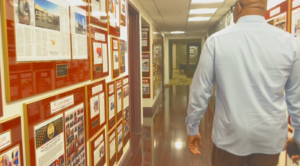
If you’re building a recognition wall, the display can become part of a larger story about what the company values.
A Framed Award Can Show Employees What Matters
There is another reason to think beyond decoration.
Recognition can communicate company values.
Imagine walking into an office and seeing recognition for:
- Leadership
- Customer service
- Innovation
- Teamwork
- Community involvement
- Professional excellence
- Long-term dedication
Those displays aren’t only saying:
“Congratulations to this person.”
They’re also communicating:
“These are the things we value here.”
Research on employee recognition supports the broader importance of meaningful recognition in the workplace. Gallup, for example, reports that employees who don’t feel adequately recognized are more likely to consider leaving, while effective recognition helps employees understand that their contributions are valued.
The framed piece is not the entire recognition program.
But it can give that recognition a physical presence.
Digital Recognition Has Its Place. Physical Recognition Does Something Different.
Businesses don’t have to choose between digital and physical recognition.
They serve different purposes.
An email can announce the achievement.
A company intranet can share it.
LinkedIn can celebrate it.
A team meeting can recognize it publicly.
But those moments can eventually disappear into the next email, the next post, or the next announcement.
A physical display remains.
TGN has described this distinction simply:
Digital recognition creates the moment. Physical recognition preserves the moment.
That doesn’t mean every accomplishment needs to become a plaque.
It means that the achievements that matter most can have somewhere permanent to live.
A Customer Told Us Why Physical Recognition Still Matters
One repeat TGN customer has used the company several times over the years.
Their process was simple: they provided a link to the actual article, and TGN created the finished plaque.
What stood out was how the customer described the result:
“A priceless memory.”
That’s a better explanation of physical recognition than simply saying it looks professional.
The article already existed.
The accomplishment had already happened.
The recognition had already been earned.
The framed or mounted display simply gave that achievement a permanent physical form.
That is the real value.
Make the Frame Part of the Office, Not an Afterthought
If you’re going to give an achievement valuable wall space, the presentation should fit the environment.
For a professional office, a timeless style often works better than something overly decorative.
That’s one reason the Classic Frame is a strong option for TGN customers.
Its professional appearance works naturally in:
- Offices
- Reception areas
- Waiting rooms
- Conference rooms
- Professional practices
- Recognition walls
The frame should support the achievement rather than compete with it.
The recognition is the reason people should stop and look.
Think About What Someone Sees From the Door
Here’s an insight I would emphasize that doesn’t get enough attention in the current search results:
Don’t design a framed achievement only for the person standing directly in front of it. Design it for the person walking past it.
Someone entering an office may see the piece from several feet away.
What do they notice first?
The photograph?
The headline?
The person’s name?
The company logo?
The award?
If everything is the same visual size, nothing becomes the focal point.
That’s why TGN’s story-first approach matters.
The design should help someone understand the significance of the display before they even walk up to read every detail.
This is particularly important when framing a newspaper or magazine feature.
Making everything smaller just to fit it into a smaller frame isn’t necessarily better.
Readability is part of the presentation.
A Framed Achievement Can Make a Space Feel More Personal
An office can be professionally decorated and still feel generic.
A framed achievement changes that because it belongs to the person or company occupying the space.
It says:
This happened here.
This person accomplished this.
This company earned this recognition.
That personal history is something generic office décor cannot reproduce.
And that’s why I wouldn’t recommend treating framed achievements as simply another category of wall decoration.
They’re closer to visual storytelling.
You Don’t Need to Frame Everything
This is my honest take.
I don’t think every award needs professional framing.
If someone has a simple certificate that they want to protect and display, a standard retail frame can do the job.
The reason to consider a custom framed award is when the story matters as much as the document.
If you have a newspaper feature, several photographs, company branding, a major professional accomplishment, or an important recognition that deserves to become a focal point, that’s when custom presentation starts making more sense.
The frame should solve a presentation problem.
It shouldn’t exist just because someone thinks every achievement needs a frame.
The Goal Is Not to Fill the Wall
The best recognition displays don’t make an office look like a trophy warehouse.
They make the accomplishments feel intentional.
A good framed achievement should make someone want to ask:
“What’s the story behind that?”
That’s when the wall becomes more than décor.
It becomes part of the identity of the office.
How to Elevate Your Office With a Framed Achievement
Start with one achievement that genuinely matters.
Then ask:
- What makes this achievement meaningful?
- What part of the story should people notice first?
- Does it include an article, photograph, logo, or other important element?
- Where will people see it?
- Should it be a simple frame or a custom recognition display?
- Does the finished design look like it belongs in the office?
The answers will tell you more about the right frame than simply measuring the piece of paper.
And that’s the biggest difference between framing an award and creating a display around an achievement.
Give Your Achievement a Place in Your Office
A meaningful achievement shouldn’t have to disappear into a file cabinet once the celebration is over.
Whether it’s a professional accomplishment, published article, business milestone, employee recognition, or personal achievement, the right framed presentation can turn that moment into something people can see every day.
At That’s Great News, the approach starts with the story.
Then we build the presentation around it.