
1. Tell me about a real Own Frame project where the customer had an idea but the final presentation needed a different approach.
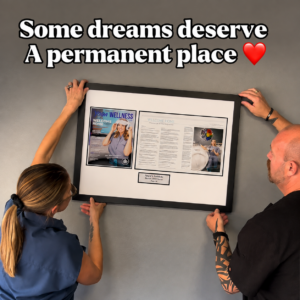
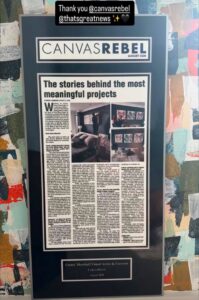
One example that really illustrates the value of an Own Frame Award is Mindi DeLancey of Cornerstone Primary Care.
She had an article about her clinic published in The Pine Belt News. Her original thought was to simply cut the newspaper article out and frame it herself.
When she saw what That’s Great News could do with the article, she realized there was an opportunity to turn it into something much more professional and permanent.
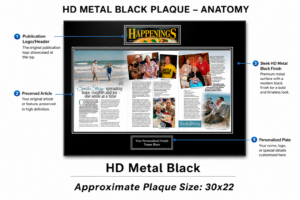
That is something I think people sometimes overlook. The customer already has the accomplishment. They already have the newspaper article or photograph. The design challenge is figuring out how to present that material so it feels worthy of the achievement.
In her case, the finished plaque gave the article a much more polished presentation than simply putting the clipping into a standard frame.
2. What is the biggest mistake customers make when choosing an Own Frame design?
The biggest mistake is trying to make everything equally important.
Customers may have an article, photograph, company logo, name, date, headline, and other information they want included. Their instinct is often to make sure everything gets the same amount of attention.
I don’t think that’s the best approach.
You need to decide what the person should notice first.
If the newspaper article is the achievement, make the article the focus. If the photograph tells the story better, make the photograph the focal point.
The other elements should support that primary message rather than compete with it.
3. What is the first thing someone should decide before choosing a frame?
Decide what you’re actually trying to preserve.
Don’t start with, “What frame color do I want?”
Start with:
What achievement or memory am I trying to preserve?
It could be a newspaper article, magazine feature, photograph, business milestone, professional achievement, award, or several pieces of recognition.
Once you know what the centerpiece is, the rest of the design becomes much easier.
That’s the approach we’ve found works best at TGN.
4. Tell me about another real project that demonstrates why layout matters.
The Heidi Rasor project is a good example because it involved multiple pieces of published material, photographs, and personalized information in one substantial display.
That’s a very different design problem from framing one newspaper article.
When you have several important pieces, you can’t simply shrink everything until it fits.
You have to create hierarchy.
One element needs to lead the eye, while the other pieces provide supporting information.
Sometimes that means going with a larger frame instead of trying to squeeze everything into a smaller one.
5. What do customers often misunderstand about frame size?
They sometimes judge the design based on how it looks on their computer screen.
That’s misleading.
A newspaper article might look perfectly readable on a monitor, but once you put that article alongside photographs, logos, personalization, borders, and the physical frame, the space disappears quickly.
That’s why we look at the physical display, not just whether the content technically fits.
A design can fit and still be too crowded.
6. How do you know when an Own Frame should be larger?
If making the frame smaller forces you to make the important information difficult to read, that’s usually a sign that you need more space.
We have created projects ranging from approximately 16×20 inches to 30×30 inches, depending on the amount of material and what the customer wants to display.
I would rather see someone choose the appropriate size than sacrifice readability simply to save wall space.
7. What’s your honest opinion about minimalist Own Frame designs?
I actually think less can be more.
People sometimes assume a custom award needs lots of photographs, text, borders, logos, and decorative elements to make it impressive.
It doesn’t.
If the achievement itself is powerful, the design should give it room to stand out.
A clean design with the right photograph, article, name, date, and recognition can have much more impact than a crowded design.
8. When should the photograph be the main focus?
When the photograph tells the emotional part of the story.
For example, if the achievement involves receiving an important award, opening a business, meeting an important client, winning a championship, or reaching a major milestone, the photograph may immediately communicate what happened.
The article or text can then provide the context.
There isn’t a rule that says the newspaper article always has to be the biggest element.
The story determines the hierarchy.
9. What if someone has multiple newspaper or magazine features?
Don’t automatically create a separate small frame for every article.
Sometimes combining multiple pieces into one larger Own Frame Award creates a much stronger display.
Instead of looking at each article as a separate accomplishment, you can make the collection tell a bigger story about the person or company.
That’s what makes a project like Heidi Rasor’s useful as an example. Multiple pieces can become one cohesive recognition display when they’re organized correctly.
10. How should a business approach an Own Frame design differently?
Businesses should think about both recognition and credibility.
A business recognition display could combine:
- Company logo
- Newspaper or magazine article
- Photograph
- Achievement
- Date
- Personalized information
The important thing is not to turn the frame into an advertisement.
The actual achievement should remain the focus.
The article provides third-party credibility. The photograph gives people context. The company identity connects the accomplishment back to the business.
That’s much stronger than simply putting a company logo on a generic trophy.
11. Where should someone think about displaying the finished award?
The location should be considered before the design is finalized.
Ask where it will go:
- Reception area
- Executive office
- Conference room
- Hallway
- Recognition wall
- Home office
- Living room
The viewing distance matters too.
Something that looks great when you’re standing two feet away might not communicate anything from across a reception area.
The design needs to work in the actual environment where it will live.
12. How much does an Own Frame Award cost?
There isn’t one universal price because the cost depends on the size, materials, amount of content, and complexity of the design.
For the TGN projects we’ve discussed, pricing can fall roughly in the $169–$399 range, with larger or more complex projects potentially requiring a different configuration.
I wouldn’t tell someone to choose based solely on price.
The better question is: What level of presentation matches the importance of the achievement?
13. How quickly can someone get one?
Depending on the project, TGN has been able to produce these pieces in approximately one week, while some projects have shipped in the 7–10 business-day range.
The exact timeline depends on the project.
If someone needs an Own Frame Award for a retirement, presentation, celebration, office opening, or other specific event, they should bring up the deadline before ordering.
14. What’s something customers don’t need to worry about?
They don’t need to be graphic designers.
Customers don’t need to know exactly how every photograph, article, logo, and piece of text should be arranged.
They need to know:
- What they want to preserve.
- Why it matters.
- What information they want included.
- Where they expect to display it.
The design can then be built around those priorities.
15. What do you think people get wrong about DIY framing?
There’s nothing wrong with buying a standard frame if all you want to do is protect a piece of paper.
But there’s a difference between holding something and presenting something.
A standard frame is primarily designed to hold an item.
An Own Frame Award is designed around the recognition itself.
Once you’re combining articles, photographs, logos, personalization, and other elements, you’re no longer simply putting something behind glass. You’re creating a presentation.
Mindi DeLancey’s experience is a good example. She originally considered framing the newspaper article herself, but ultimately chose a professionally presented plaque because she wanted the recognition to look like something worth keeping.
The insight I would make the centerpiece of the article
Here’s the strongest original TGN point I would build the article around:
Don’t choose the frame first. Choose what deserves to be remembered first.
That is more useful than generic advice such as “choose a frame that matches your décor.”
The frame is only one component.
The real design decisions are:
Achievement ? focal point ? supporting content ? physical size ? display location ? frame
not:
Frame ? squeeze everything inside it.
That gives us a much stronger angle for “How to Choose the Perfect Own Frame Design” and ties directly to TGN’s actual experience with customer projects.
One section still needs a follow-up
The article can be written from the information above, but I would not fabricate a specific customer story about a design being changed after an initial concept because the public material doesn’t establish that exact sequence.
Everything else gives us enough firsthand TGN experience to make the article substantially more specific than a generic “how to choose a frame” post.