A framed award can do more than recognize an employee’s achievement. When recognition is professionally displayed and remains visible in an office, it can reinforce a person’s sense of accomplishment, remind others what the organization values, and create a lasting symbol of appreciation. Research supports the broader connection between meaningful employee recognition and engagement, while That’s Great News’ experience with physical recognition shows another important piece: when recognition becomes something people can see and keep, the achievement doesn’t disappear after the ceremony.
For more than two decades, That’s Great News has helped people turn achievements, newspaper and magazine features, and professional recognition into physical displays. Since 2003, the company has shipped more than 500,000 plaques, giving us a unique perspective on why people continue to choose physical recognition even when so much recognition now happens digitally.
Why Employee Recognition Matters
Recognition works because people want to know that their effort matters.
That sounds simple, but it is easy for organizations to overlook.
An employee can receive a quick email saying “great job.” A manager can mention an accomplishment during a meeting. A company can post congratulations in Slack or on its internal communication platform.
Those forms of recognition have value.
But they can also disappear quickly.
A framed employee award is different because it creates a physical reminder of the accomplishment. Instead of recognition existing only in a message that eventually gets buried, it can become part of the employee’s workspace.
Research backs up the importance of recognition itself. Gallup reports that employees who don’t feel adequately recognized are twice as likely to say they will leave their organization within the next year.
That doesn’t mean hanging a framed award on a wall will automatically make someone perform better.
It means the way recognition is delivered matters, and a physical award can give that recognition greater permanence and visibility.
1. Framed Awards Make Achievement Visible
One of the biggest advantages of a framed recognition award is visibility.
Think about what happens when an employee receives an email congratulating them.
They read it.
They appreciate it.
Then another 50 emails arrive.
The recognition is still meaningful, but it is no longer visible.
A framed award doesn’t work that way.
It might hang behind the employee’s desk. It might be displayed in an office. It might be placed in a reception area or conference room.
The accomplishment stays in the environment.
That’s important because recognition isn’t only about the moment it is given. It can continue communicating the value of the achievement afterward.
A professionally framed award can tell employees:
This work mattered.
And to everyone else:
This is the kind of work we recognize here.
2. A Physical Award Turns Recognition Into a Reminder
Motivation can be difficult to maintain when employees are dealing with deadlines, difficult customers, long projects, or repetitive work.
A physical reminder of past success can provide a small but meaningful psychological boost.
This is one reason framed awards are particularly useful for:
- Employee of the Month
- Employee of the Year
- Years of service
- Sales achievements
- Leadership awards
- Team accomplishments
- Professional certifications
- Customer service recognition
- Safety achievements
- Community involvement
- Major project completion
A traditional certificate can recognize the same accomplishment.
But a custom framed award can make the recognition feel more substantial and permanent.
That presentation matters.
Current recognition providers similarly position framed awards as a way to commemorate achievements and create displays employees can be proud to keep in their offices or homes.
3. Framed Recognition Shows That the Achievement Was Worth Preserving
There is a difference between recognizing something and preserving it.
A manager saying “thank you” recognizes an employee.
A bonus recognizes an employee.
A certificate recognizes an employee.
A framed award can do something additional: it preserves the recognition.
That’s particularly powerful when the award contains something connected directly to the achievement.
For example, instead of creating a generic plaque that simply says:
Employee of the Year
2026
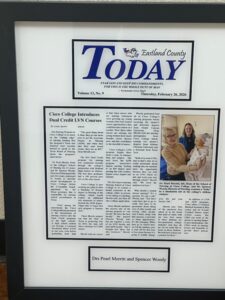
a company could create a recognition piece around the employee’s actual accomplishment, including photographs, a newspaper article, company branding, project information, or other meaningful details.
That is one of the areas where That’s Great News’ experience is different from a traditional trophy company.
The goal isn’t simply to put words on a plaque.
The goal is to tell the story of the achievement.
TGN’s own guidance for designing an Own Frame Award recommends starting with the story or achievement rather than starting with the frame.
4. A Framed Award Can Reinforce Company Culture
Recognition also affects people who aren’t receiving the award.
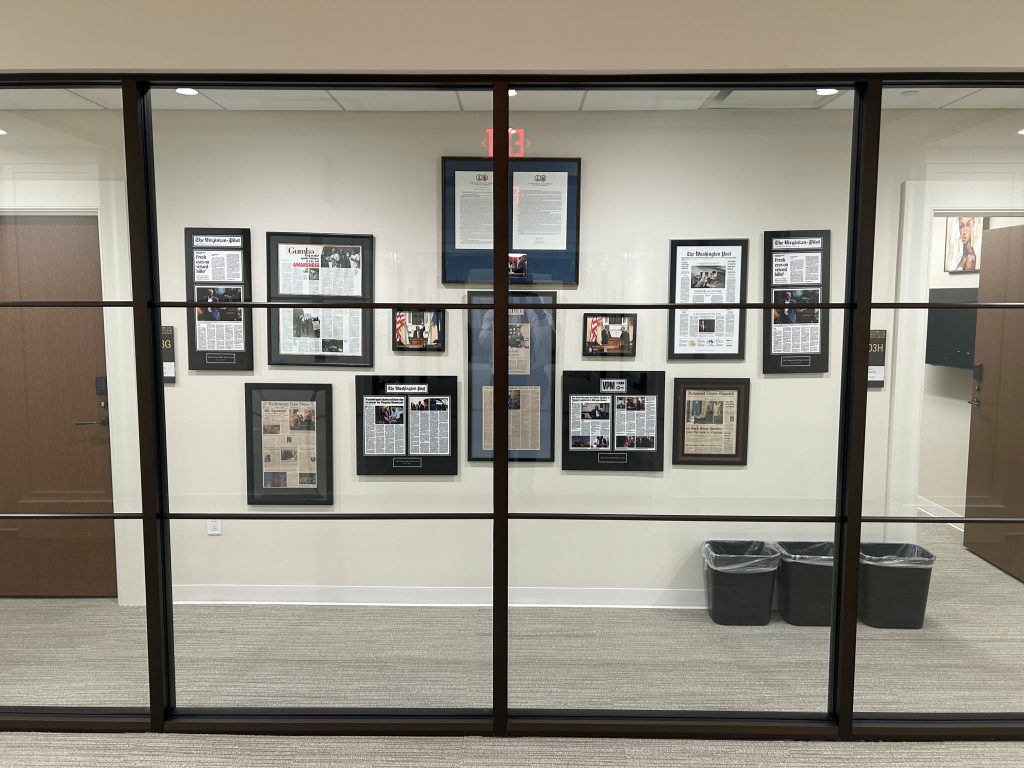
Imagine walking into an office and seeing a wall displaying framed awards for employees who have demonstrated:
- Outstanding customer service
- Leadership
- Innovation
- Reliability
- Teamwork
- Sales performance
- Years of dedication
Those awards become visual examples of what the organization values.
This is an important distinction.
The award isn’t only saying:
Congratulations, John.
It’s also saying:
This is what we appreciate here.
That can help make company values more tangible.
People Management Association of the Philippines, for example, describes recognition programs as a way to highlight exceptional achievement and promote people-first workplace practices.
A framed recognition display can bring that principle into the physical workplace.
5. Public Recognition Can Motivate More Than Private Praise
There is another reason the location of a framed award matters.
Recognition displayed publicly can have a different effect from recognition delivered privately.
A certificate handed to someone in an envelope may be appreciated by the recipient.
A framed award displayed in an office or common area can also be seen by coworkers, customers, leadership, and visitors.
That visibility gives the achievement social meaning.
Research on symbolic awards has found that recognition can influence employee performance even when the award itself has little or no monetary value.
The lesson isn’t that companies should plaster awards everywhere.
It’s that recognition doesn’t have to be expensive to be meaningful.
Sometimes the value comes from the message behind it.
6. Framed Awards Can Give Employees Something They Actually Keep
This is where our customer experience becomes particularly relevant.
One TGN customer described receiving our work as a “priceless memory.”
The customer explained that they had used That’s Great News several times and simply provided a link to the article they wanted preserved. TGN transformed that online recognition into a professional physical plaque.
That customer wasn’t describing the product as something temporary.
They were describing it as something worth keeping.
Another customer, Kim Taylor, had recently received an honor and newspaper write-up. She chose to memorialize the achievement with a beautiful wooden plaque and said:
“I will cherish my beautiful wooden plaque for years to come!”
That’s the part generic discussions about employee recognition often miss.
People don’t always remember the recognition because of the words that were spoken when they received it. They remember it because they can continue seeing what they accomplished.
7. A Framed Award Can Preserve the Story Behind the Achievement
This may be the biggest difference between a generic award and a custom framed recognition piece.
A standard trophy often tells you what someone won.
A custom framed display can tell you why they earned it.
For example, a newspaper article might show how an employee helped the community.
A magazine feature might explain how a professional built their career.
A photograph might capture the team behind a major accomplishment.
A company announcement might document a major milestone.
When those elements are professionally framed, the recipient gets more than an award.
They get the story.
That’s why TGN’s approach to framed recognition often starts with the material being preserved rather than simply selecting an award template.
The Real Connection Between Framed Awards and Motivation
It’s important not to oversell this.
A framed award isn’t a substitute for good management, fair compensation, career development, or a healthy workplace.
Putting a plaque on someone’s desk won’t fix a company with poor leadership.
But recognition is one part of the employee experience, and research consistently shows that meaningful recognition matters.
The physical award can strengthen that recognition by making it:
Visible.
Specific.
Personal.
Permanent.
Those four characteristics can make a recognition moment feel different from a quick “good job” email.
And that is where framed awards can have a role in motivation.
A Real-World Example From That’s Great News
That’s Great News has actually seen the value of physical recognition reflected in customer feedback and business use cases.
An earlier TGN case study about employee recognition reported that a major hotel chain saw:
- 17% lower staff turnover
- 69% fewer customer service complaints
- 51% increase in repeat business
- Employee pride in working for the company increasing from 87% to 98%
The article attributes the improvement to a broader recognition approach that included custom article mounting and employee recognition plaques.
That doesn’t mean the plaque alone caused those results.
That’s an important distinction.
But it demonstrates something worth considering: when recognition becomes part of a broader employee-recognition strategy, physical displays can be one of the tools companies use to make appreciation tangible.
Why Framed Awards Can Be More Meaningful Than Generic Trophies
A generic award might say:
Outstanding Performance
Presented to
Jane Smith
There’s nothing wrong with that.
But imagine instead that Jane’s award includes the article about her accomplishment, a photograph of her team, the company logo, the date, and a personalized recognition message.
Now the award has context.
Years later, Jane can look at it and remember not just that she won, but what she accomplished.
That’s the difference between a generic recognition product and a custom framed award.
The frame becomes part of the presentation.
The content becomes part of the story.
And the recognition becomes something worth displaying.
How to Make a Framed Employee Award More Motivating
If you’re creating a recognition award for your team, don’t make the mistake of thinking that simply putting someone’s name on a frame is enough.
Make the award specific.
Include the achievement
Explain what the person actually accomplished.
Include the impact
If possible, show how their work helped the company, customers, team, or community.
Include a photograph
A meaningful photograph can make the award much more personal.
Include the company identity
Your logo, colors, or branding can connect the employee’s accomplishment to the organization.
Make it visually strong
A professional frame and thoughtful layout communicate that the company took the recognition seriously.
Display it
Don’t hide the award in a drawer.
The point of a framed recognition award is that it can be seen.
TGN’s current design guidance recommends choosing the main visual element first and building the rest of the framed display around it. It also emphasizes considering the physical size and how the finished piece will actually look on a wall rather than designing only on a computer screen.
Framed Awards Are About More Than Motivation
Here’s the insight I would emphasize most strongly:
The real power of a framed award isn’t that it makes someone motivated every time they look at it. It’s that it gives the achievement a physical presence long after the recognition event is over.
That matters because motivation isn’t a single event.
People have good days and bad days.
Projects succeed and fail.
Employees change roles.
Managers change.
Teams change.
But a well-designed framed award can remain.
It becomes part of the physical history of the employee and the organization.
From Recognition to a Wall of Accomplishments
One framed award can eventually become several.
An employee might receive a service award.
Later, a leadership award.
Then recognition for a major project.
A company might accumulate awards for community involvement, business growth, customer service, and industry recognition.
Over time, the wall becomes a timeline.
That’s a concept TGN has explored in its content around how physical recognition can turn into a visible history of accomplishments.
Instead of looking at an empty wall, employees see evidence of what their team has accomplished.
Instead of asking what the company values, visitors can see it.
And instead of letting accomplishments disappear into old emails and digital folders, the organization keeps them visible.
Frequently Asked Questions About Framed Awards
Do framed awards really motivate employees?
A framed award shouldn’t be viewed as a standalone motivation strategy. Recognition itself is strongly associated with employee engagement and retention, while physical awards can make that recognition visible and lasting.
What should be included on a framed employee award?
Include the recipient’s name, the specific achievement, date, company or organization information, and any photographs, articles, logos, or other material that helps tell the story.
Are framed awards better than certificates?
Not necessarily for every situation. A certificate can be appropriate for many accomplishments. A custom framed award is particularly useful when the recognition is important enough to preserve and display.
Can a framed award include a newspaper article?
Yes. Newspaper and magazine articles can be incorporated into custom framed recognition displays. That’s Great News specifically specializes in turning published recognition into physical displays.
Where should a framed employee award be displayed?
Consider the employee’s office, workspace, reception area, conference room, recognition wall, or another location where the accomplishment can be appropriately seen.